
Maria Guțu
Maria Guțu's photographic practice explores memory, migration, and the fragile relationship between people, landscape, and the idea of home. Through poetic documentary photography, she creates intimate narratives about belonging, childhood, and the changing rural realities of the Republic of Moldova.
MARIA GUȚU (b. 1996, MD) is a photographer whose practice explores the notions of home, memory, youth, migration, and the relationship between people, animals and the landscapes they inhabit. Gutu graduated in Cinematography from the Academy of Music, Theatre and Fine Arts in Chișinău in 2020.
Working primarily with black-and-white analogue photography, Guțu creates intimate visual narratives rooted in her own biography and the social realities of contemporary Moldova. Her long-term project Homeland reflects on labour migration, childhood, family separation, and the search for belonging in rural communities. Rather than documenting events, her photographs evoke emotional landscapes where memory, nature, and personal history intertwine.
Guțu has received international recognition through nominations and awards including the Leica Oskar Barnack Newcomer Award (2024), Portrait of Humanity, the Sony World Photography Awards, and The Independent Photographer. Since 2021 she has been a member of Women Photograph. Her work has been exhibited internationally and featured in exhibitions and festivals across Europe and beyond.
The following artworks will be shown as part of the EVROVIZION.CROSSING STORIES AND SPACES project:
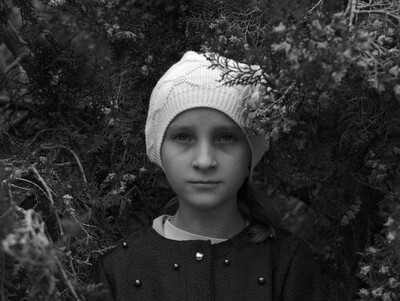
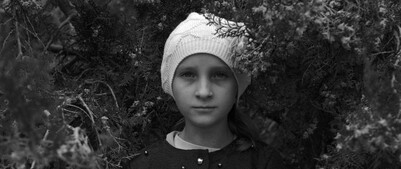
After School Portrait, from the series Homeland, Izvoare village, Republic of Moldova, 2019.
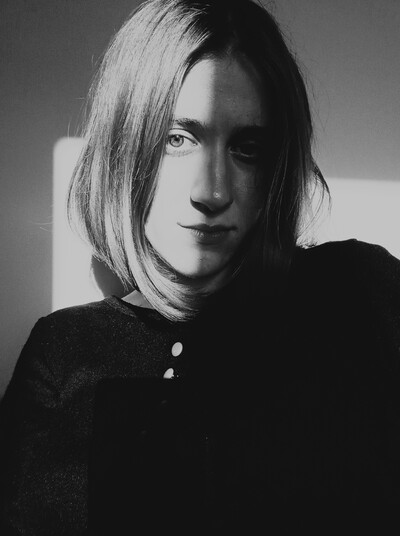
Portrait of Maria, from the series Homeland, Sofia village, Republic of Moldova, 2024.
Girl with the Dog, from the series Homeland, Varancău village, Republic of Moldova, 2021.
© Maria Guțu
In her ongoing photographic series Homeland, Maria Guțu explores everyday life in the rural regions of the Republic of Moldova. Rooted in personal encounters, her photographs connect individual experiences with the broader social transformations shaping the country. The selected works portray girls in their immediate surroundings. Working in analogue black-and-white photography, Guțu creates im ages in which animals and nature are integral parts of their everyday environment. Her photographs are characterised by intimacy, trust, and mutual respect, qualities that reflect the close relationships she establishes with her subjects.
Since the 1990s, labour migration has profoundly transformed the Republic of Moldova. While many adults spend extended periods working abroad, numerous children grow up with their grandparents or other relatives. Rather than documenting this reality directly, Guțu’s photographs reveal how political and economic change shapes everyday life, family relationships, and the experience of growing up. Without seeking the extraordinary, her photographs offer a sensitive reflection on the long-term consequences of social transformation as they unfold in the quiet moments of life.
As in Liliana Corobca’s novel Kinderland, the focus lies not on migration itself, but on the everyday lives of the children who remain.
